
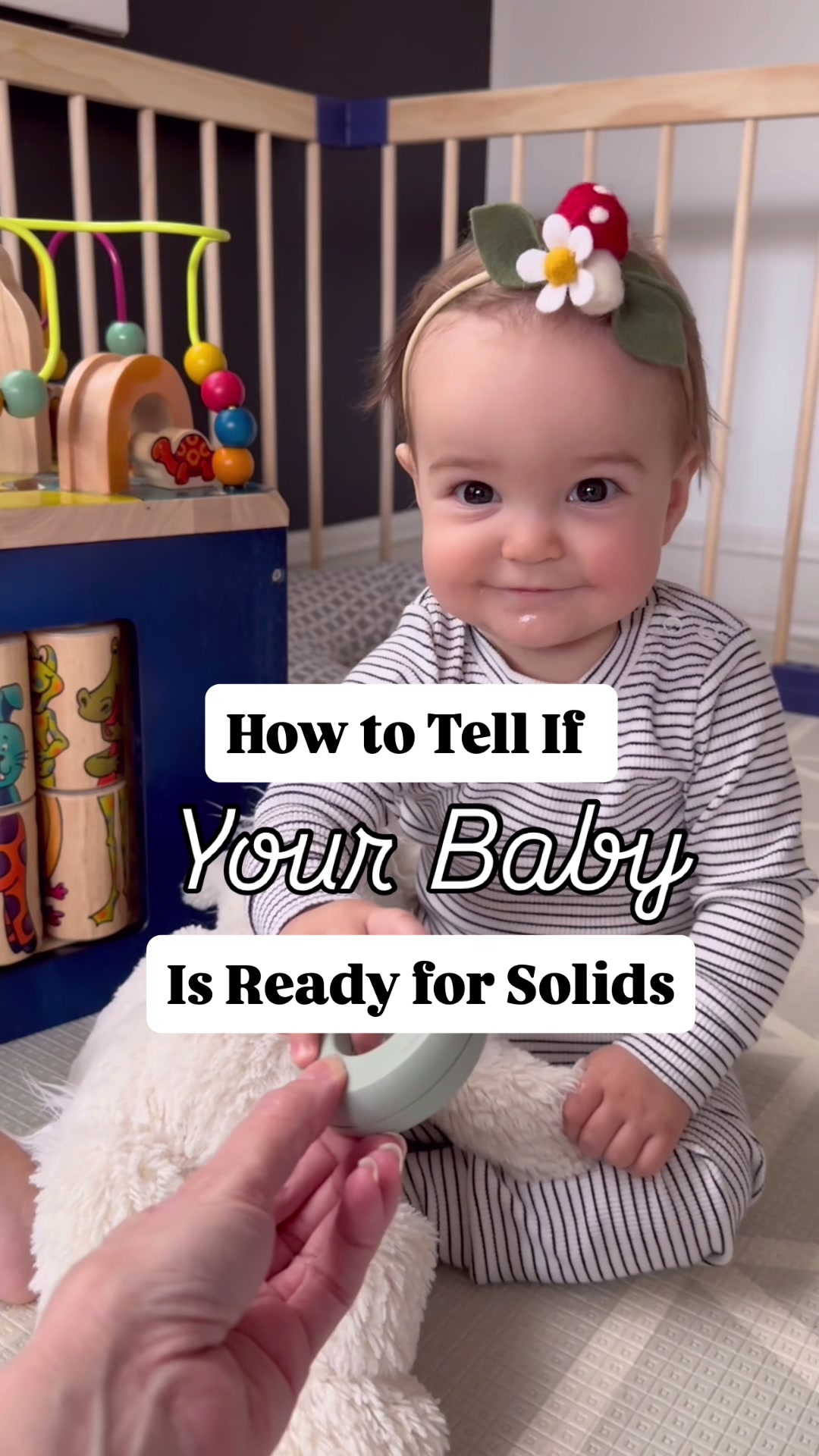
Is your baby *really* ready? 🍗 While some pediatricians still advise starting babies on infant cereal around 4 months old, this is outdated advice: as of 2020, the American Academy of Pediatrics, U.S. National Institutes for Health, and World Health Organization all recommend waiting until your baby shows signs of developmental readiness to introduce solids–which tend to show up around 6 months old. Why? It’s critical that solids not replace breastmilk or formula in the early months, and research has not found any nutritional benefit of starting before readiness signs for most babies. Six months of age is also when baby’s iron needs begin to increase, so a perfect overlap of skill and changing nutritional need. So what are the signs of readiness? Babies who are showing all of the below developmental milestones have the foundational skills needed to safely explore solid foods. ✔️Sitting: Baby is able to sit with a little bit of support ✔️Head Control: Baby is able to hold head upright and steady for duration of meal ✔️Reach & Grab: Baby is able to pick up objects and easily bring them to her mouth while sitting ✔️Interest: Baby intently watches you eat, mouths for food, or leans forward for it *Note that babies who are high risk for developing food allergies may be advised by their medical provider to begin allergen exposure as early as 4 months. We recommend following a responsive spoon feeding approach when introducing these tastes. If you need help getting started, the Solid Starts App walks you through the safe introduction of solid food, day by day.
♬ Summer Vibes upbeat happy background – SunSmileMusic
@solidstarts Is your baby *really* ready? 🍗 While some pediatricians still advise starting babies on infant cereal around 4 months old, this is outdated advice: as of 2020, the American Academy of Pediatrics, U.S. National Institutes for Health, and World Health Organization all recommend waiting until your baby shows signs of developmental readiness to introduce solids–which tend to show up around 6 months old. Why? It’s critical that solids not replace breastmilk or formula in the early months, and research has not found any nutritional benefit of starting before readiness signs for most babies. Six months of age is also when baby’s iron needs begin to increase, so a perfect overlap of skill and changing nutritional need. So what are the signs of readiness? Babies who are showing all of the below developmental milestones have the foundational skills needed to safely explore solid foods. ✔️Sitting: Baby is able to sit with a little bit of support ✔️Head Control: Baby is able to hold head upright and steady for duration of meal ✔️Reach & Grab: Baby is able to pick up objects and easily bring them to her mouth while sitting ✔️Interest: Baby intently watches you eat, mouths for food, or leans forward for it *Note that babies who are high risk for developing food allergies may be advised by their medical provider to begin allergen exposure as early as 4 months. We recommend following a responsive spoon feeding approach when introducing these tastes. If you need help getting started, the Solid Starts App walks you through the safe introduction of solid food, day by day.